
 Search
Traveling Luck for Dominica. Dominica, North America
Dominica is located in Caribbean, island between the Caribbean Sea and the North Atlantic Ocean, about one-half of the way from Puerto Rico to Trinidad and Tobago.
Land in Dominica is rugged mountains of volcanic origin.
Dominican land covers an area of 754 square kilometers which is slightly more than four times the size of Washington, DC
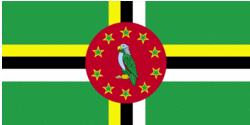 Dominican national flag (Flag of Dominica)
 Dominica country profile
 Travel advice for Dominica
As for the Dominican climate; tropical; moderated by northeast trade winds; heavy rainfall.
Dominican(s) speak English (official), French patois.
Places of note in Dominica
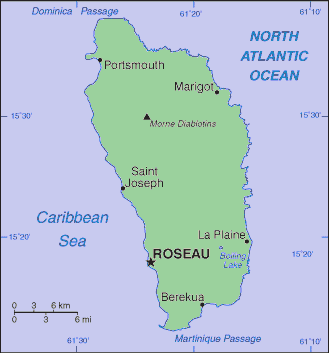 Dominican map
Regions of Dominica
Dominica was the last of the Caribbean islands to be colonized by Europeans due chiefly to the fierce resistance of the native Caribs. France ceded possession to Great Britain in 1763, which made the island a colony in 1805. In 1980, two years after independence, Dominica's fortunes improved when a corrupt and tyrannical administration was replaced by that of Mary Eugenia CHARLES, the first female prime minister in the Caribbean, who remained in office for 15 years. Some 3,000 Carib Indians still living on Dominica are the only pre-Columbian population remaining in the eastern Caribbean.
The Dominican economy depends on agriculture, primarily bananas, and remains highly vulnerable to climatic conditions and international economic developments. Production of bananas dropped precipitously in 2003, a major reason for the 1% decline in GDP. Tourism increased in 2003 as the government sought to promote Dominica as an "ecotourism" destination. Development of the tourism industry remains difficult, however, because of the rugged coastline, lack of beaches, and the absence of an international airport. The government began a comprehensive restructuring of the economy in 2003 - including elimination of price controls, privatization of the state banana company, and tax increases - to address Dominica's economic crisis and to meet IMF targets. In order to diversify the island's production base, the government is attempting to develop an offshore financial sector and is planning to construct an oil refinery on the eastern part of the island.
Dominican natural resources include timber, hydropower, arable land
known as "The Nature Island of the Caribbean" due to its spectacular, lush, and varied flora and fauna, which are protected by an extensive natural park system; the most mountainous of the Lesser Antilles, its volcanic peaks are cones of lava craters and include Boiling Lake, the second-largest, thermally active lake in the world
Dominican religion is Roman Catholic 77%, Protestant 15% (Methodist 5%, Pentecostal 3%, Seventh-Day Adventist 3%, Baptist 2%, other 2%), other 6%, none 2%.
Natural hazards in Dominica include flash floods are a constant threat; destructive hurricanes can be expected during the late summer months.
Travel Advice for Dominica
Dominica, Commonwealth ofSUMMARY
- There is no British High Commission in Dominica. For emergency consular assistance you should telephone the British Honorary Consul (+767 255 2410/2401; mobile +767 235 5495). Alternatively, you can contact the British High Commission in Bridgetown, Barbados (details below).
- The threat from terrorism is low. But you should be aware of the global risk of indiscriminate terrorist attacks, which could be against civilian targets, including places frequented by foreigners.
- Most visits to Dominica are trouble-free. The main type of incident for which British nationals require consular assistance is for replacing lost and stolen passports. Cases of robbery and other crimes do occur.
- The hurricane season in Dominica normally runs from June to November. Please see the Natural Disasters section of this Travel Advice and the Hurricanes for more information.
- We strongly recommend that you obtain comprehensive travel and medical insurance before travelling. You should check any exclusions, and that your policy covers you for the activities you want to undertake. Please see: Travel Insurance
SAFETY AND SECURITY
GENERAL